



RELIGION AND POLITICAL STRUGGLES
Jean Delmas will present to us
Religion and political struggles in Indian chromolithographs
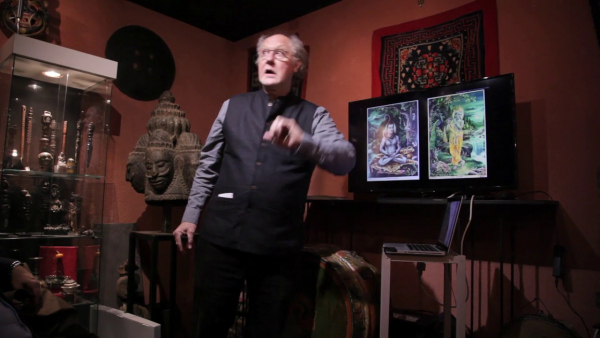
With the arrival in India of the first chromolithographic printing presses at the end of the 19th century and then the wide diffusion of religious "chromos", Indian painters brought the gods down from their skies to join the small family altars of the faithful and look them straight in the eyes, as equals.
As if they were posing in a bourgeois photography studio decorated with trompe l'oeil decor, the deities, then dressed in an almost ordinary humanity, are shown wearing small mustaches or modern saris just edged with golden braid. Thus descending into the human arena, the gods were associated with the fight of Gândhî and the Freedom Fighters against the British imperial yoke. This is how countless posters were distributed throughout the subcontinent showing a god delivering an explicit or cleverly subliminal anti-English message to deceive colonial censorship.
The greatest Indian painters, Ravi Varma, R. G. Chonker, Narottam Narain Sharma... participated in this movement by submitting their works to virtuoso printers like Ravi Varma Press, Chitrashala or S. S. Brijbasi.